What Are Managed IT Services? The Complete Guide
Managed IT services are ongoing technology support, monitoring, and security delivered by an outside provider for a predictable flat monthly fee. Instead of fixing problems after they happen, a managed service provider proactively manages your systems to prevent downtime, secure your data, and keep your business running, so you can focus on your work instead of your technology.
- Managed IT services outsource the day-to-day management of your technology to a managed service provider for a predictable monthly fee.
- The model is proactive: the provider monitors and maintains your systems to prevent problems, instead of waiting to react like break-fix support.
- A typical agreement bundles help desk, proactive monitoring, cybersecurity, data backup, and IT strategy under one service level agreement.
- It is usually cheaper and more reliable than an in-house IT team for small and midsize businesses, and it scales as you grow.
- Top IT MSP is an independent directory that helps you compare and choose a vetted provider on merit, not on who pays the most.
What are managed IT services?
Managed IT services are the practice of outsourcing the day-to-day management of your technology to a specialized outside provider, called a managed service provider (MSP), for a predictable flat monthly fee. Rather than employing a full in-house IT team or calling someone only when something breaks, you hand responsibility for monitoring, maintaining, securing, and supporting your systems to a partner whose entire job is to keep your technology running.
The defining idea is that the work is ongoing and proactive. The provider watches your systems around the clock, applies updates, prevents problems before they cause downtime, and answers your team's support requests, all under one agreement. It is a model built for businesses that depend on technology but do not want to build a large internal department to manage it.
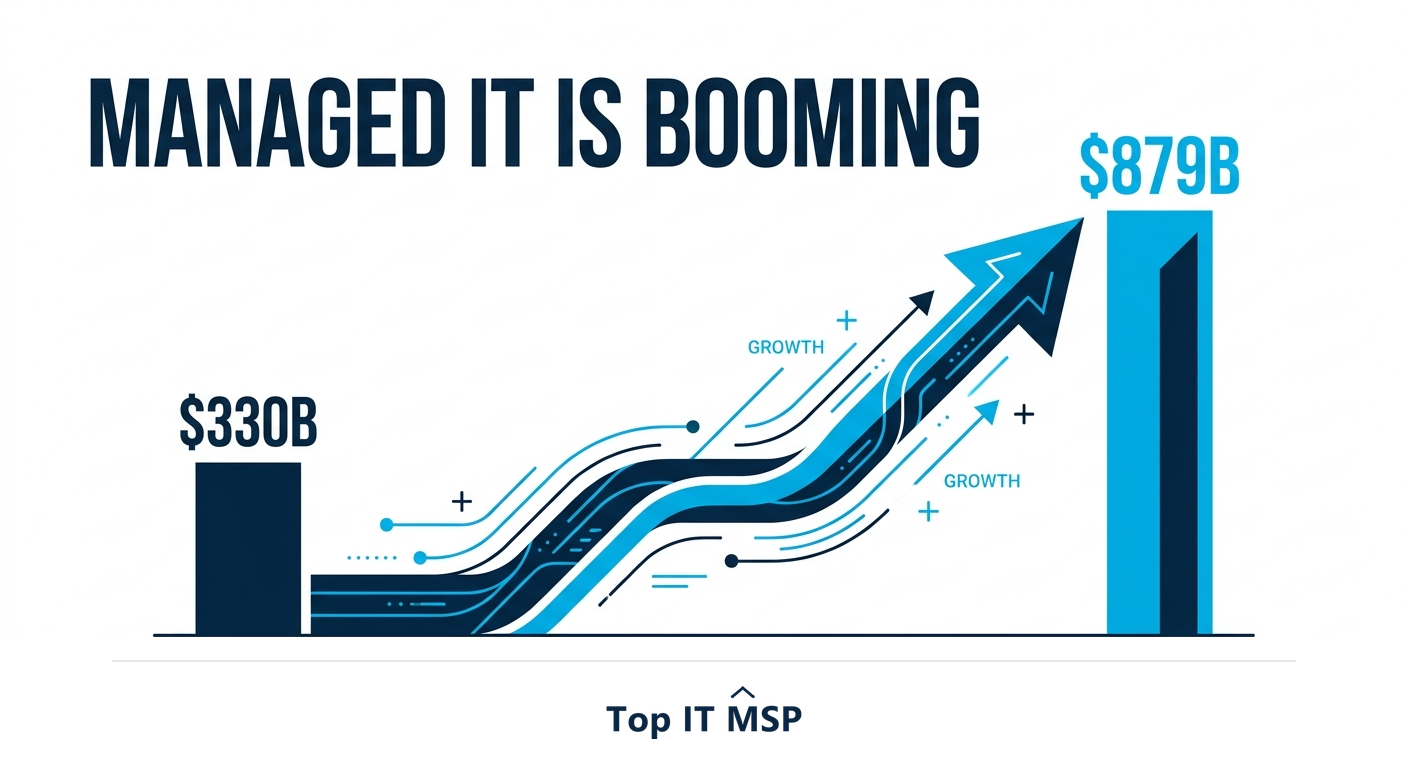
Demand has grown quickly. The global managed services market was valued at roughly $330 billion in 2024 and is projected to reach about $879 billion over the next decade, growing at roughly a 13 to 15 percent compound annual rate. Businesses are leaning on providers because technology is more central, more complex, and more targeted than ever.
How the managed IT services model works
A managed IT relationship runs on a service level agreement (SLA), a written contract that defines what the provider will deliver, how fast they will respond, and what uptime they guarantee. You pay a predictable monthly fee, usually priced per user or per device, and in return the provider manages the agreed scope of your technology. Because the fee is fixed, the provider is motivated to prevent problems rather than profit from them, which aligns their incentives with yours.
Most providers use remote monitoring and management tools to watch your systems continuously. When a server runs low on space, a security patch is missing, or a device starts to fail, the provider often sees and fixes it before you notice. This proactive approach is what separates managed IT from older support models, and it is why uptime and security improve when you make the switch.
What is included in managed IT services?
Scope varies by provider and plan, but a comprehensive managed IT agreement typically bundles the following under one monthly fee:
- Help desk support. A team your staff can call or message to resolve everyday technology problems quickly.
- Proactive monitoring and maintenance. Around-the-clock monitoring, patching, and updates that prevent issues and keep systems healthy.
- Cybersecurity. Protection such as endpoint security, email security, and multi-factor authentication to defend against attacks.
- Data backup and disaster recovery. Regular data backup and a tested plan to restore quickly after an outage or attack.
- Cloud and infrastructure management. Management of your cloud services, servers, and network so they stay secure and available.
- IT strategy. Guidance and planning, often through a virtual CIO, so technology decisions support your business goals.
You can read a fuller breakdown in our managed IT services overview, which explains each component in detail.
Managed IT vs break-fix vs in-house IT
The easiest way to understand managed IT services is to compare them with the alternatives. The contrast with break-fix support is the sharpest.
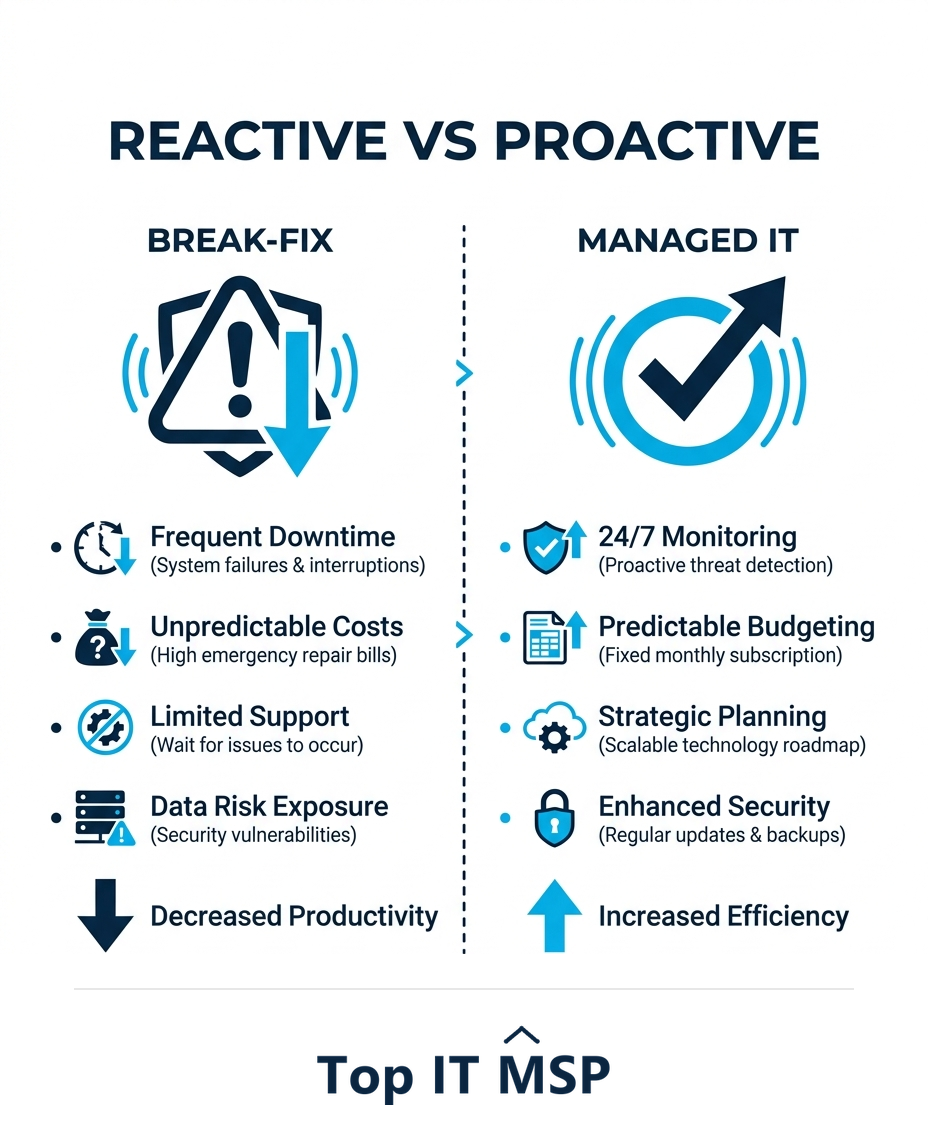
- Break-fix is reactive: you call a technician only when something breaks and pay by the hour. Costs are unpredictable, downtime is common, and no one is preventing problems.
- Managed IT is proactive: a provider monitors and maintains everything for a flat fee, preventing most problems before they cause downtime.
- In-house IT means hiring your own staff. It offers control but is expensive, hard to staff around the clock, and difficult to keep current across every specialty.
Many businesses also blend models, keeping a small internal team and adding a provider through co-managed IT to cover gaps, projects, and after-hours coverage.
The benefits of managed IT services
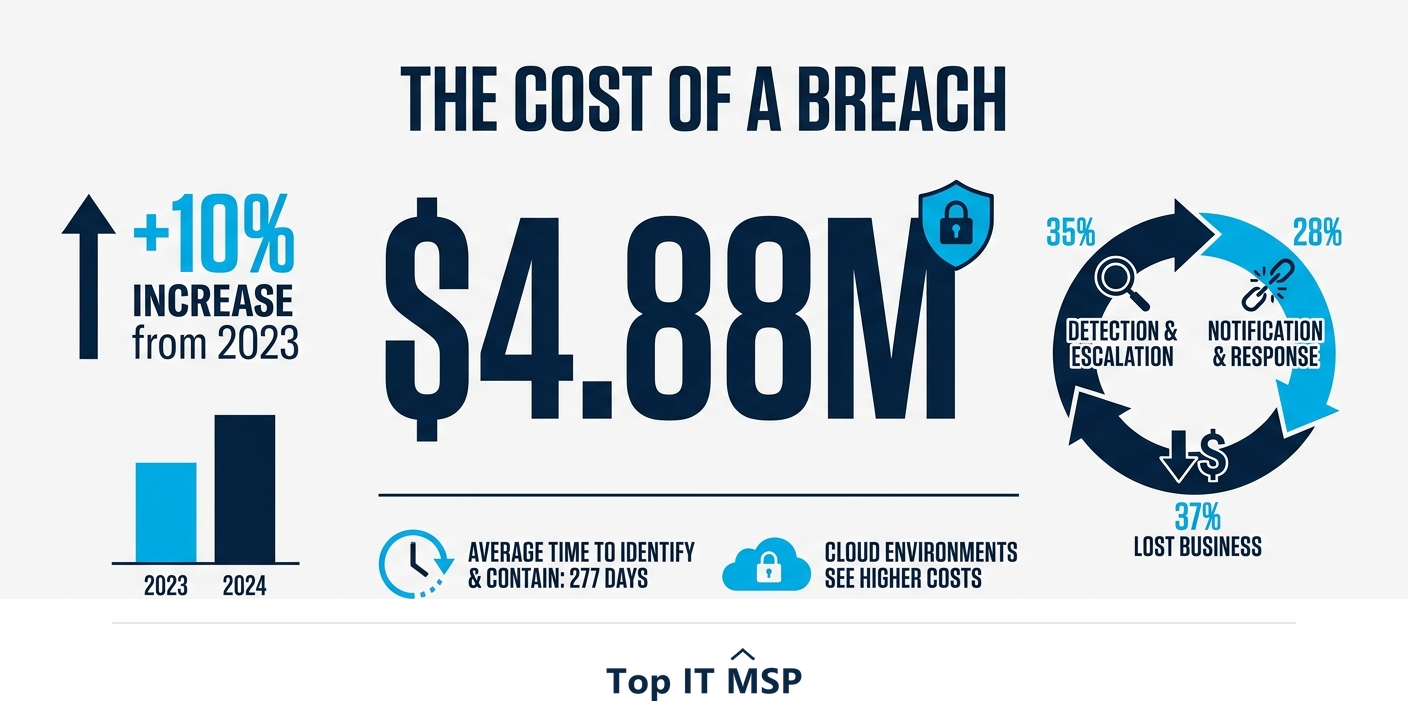
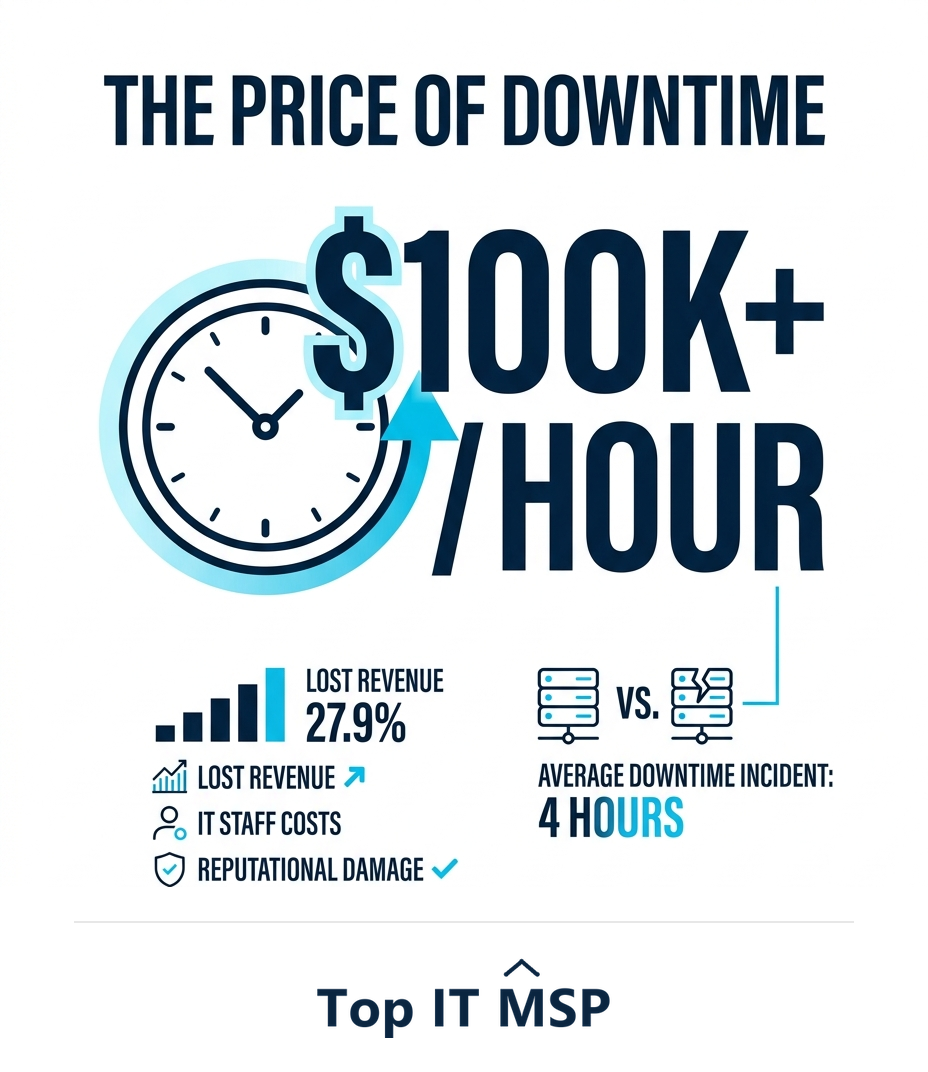
The case for managed IT comes down to cost, reliability, and security. Outages are expensive: an hour of downtime costs most organizations more than $100,000, so preventing it pays for the service many times over. Security matters just as much, with the average data breach now costing $4.88 million and reported cybercrime losses exceeding $12.5 billion in a single year. A provider gives you enterprise-grade defenses that most businesses cannot build alone.
Talent is the other driver. There is a global shortfall of about 4.8 million cybersecurity professionals, which makes hiring and retaining skilled staff hard and costly. A managed provider spreads a deep, specialized team across many clients, so you get expertise you could not afford to employ full time. As more of your operation moves to the cloud, in a market where public cloud spending is forecast to top $723 billion in 2025, that expertise only becomes more valuable.
The model is also scalable. Because you pay per user or per device, costs rise and fall with your headcount, so the same partner can support you whether you have 10 employees or 300.
What do managed IT services cost?
Managed IT is usually priced per user or per device per month. Across the market, comprehensive plans commonly run about $100 to $250 per user per month, depending on how much security, compliance, and strategy is included. The predictable fee is the point: it converts the unpredictable, spiky cost of break-fix and emergencies into a single line item you can budget. For a full breakdown of pricing models and example monthly costs by company size, see our managed IT services pricing guide.
Who needs managed IT services?
Managed IT services fit almost any small or midsize business that depends on technology but does not want to build and run a full internal department. They are especially valuable if you lack in-house IT, if your current break-fix approach causes too much downtime, if you face security or compliance requirements, or if you are growing and need IT that can scale with you. If technology problems regularly pull you away from running your business, a managed provider is usually the answer.
The hard part is choosing the right provider, because quality varies widely. Shortlist a few, compare them on response times, included security, and references, and pick the best fit. To start from a vetted, merit-ranked list, browse providers by city in the Top IT MSP directory.
Frequently asked questions
What is the difference between managed IT services and break-fix support?
Break-fix support is reactive: you call a technician only when something breaks and pay by the hour, so costs are unpredictable and no one prevents problems. Managed IT services are proactive: a provider monitors and maintains your systems for a flat monthly fee, preventing most issues before they cause downtime. Managed IT delivers more reliability and predictable cost.
What is a managed service provider (MSP)?
A managed service provider is the outside company that delivers managed IT services. It takes responsibility for monitoring, maintaining, securing, and supporting your technology under a service level agreement for a predictable monthly fee, acting as your outsourced IT department or as a partner to your in-house team.
What is typically included in managed IT services?
A comprehensive agreement usually bundles help desk support, proactive monitoring and maintenance, cybersecurity, data backup and disaster recovery, cloud and infrastructure management, and IT strategy, all under one monthly fee. The exact scope is defined in the service level agreement, and plans range from basic support to fully managed security and strategy.
Are managed IT services worth the cost?
For most small and midsize businesses, yes. An hour of downtime costs most organizations more than $100,000 and the average breach costs $4.88 million, so preventing those events usually saves far more than the monthly fee. Managed IT also gives you specialized expertise that is hard and expensive to hire in-house.
How much do managed IT services cost?
Managed IT is usually priced per user or per device per month, with comprehensive plans commonly running about $100 to $250 per user per month depending on the security, compliance, and strategy included. The flat fee turns unpredictable break-fix costs into a single, budgetable line item. See our pricing guide for example monthly costs by company size.
Related reading
Find a managed IT provider you can trust
Top IT MSP is the independent directory of vetted managed IT providers across North America. Compare merit-ranked firms in your city on real ratings and verified data, not on who pays the most. No pay-to-play.
Top IT MSP is an independent directory that connects you with vetted managed IT providers. Browse the directory city by city:
- Managed IT Services in Houston
- Managed IT Services in Dallas
- Managed IT Services in Phoenix
- Managed IT Services in Atlanta
- Managed IT Services in Portland
- Managed IT Services in Portland, ME
- Managed IT Services in Portsmouth, NH
- Managed IT Services in Providence
- Managed IT Services in Raleigh
- Managed IT Services in Reno