What Is Data Breach Insurance?
Data breach insurance covers the costs of responding to a data breach: forensic investigation, notifying affected people, credit monitoring, legal fees, public relations, and regulatory expenses. It is the first-party breach-response part of cyber insurance, often bundled into a broader cyber liability policy that also covers third-party claims. Any business that holds personal, financial, or health data should consider it, given the average breach costs millions.
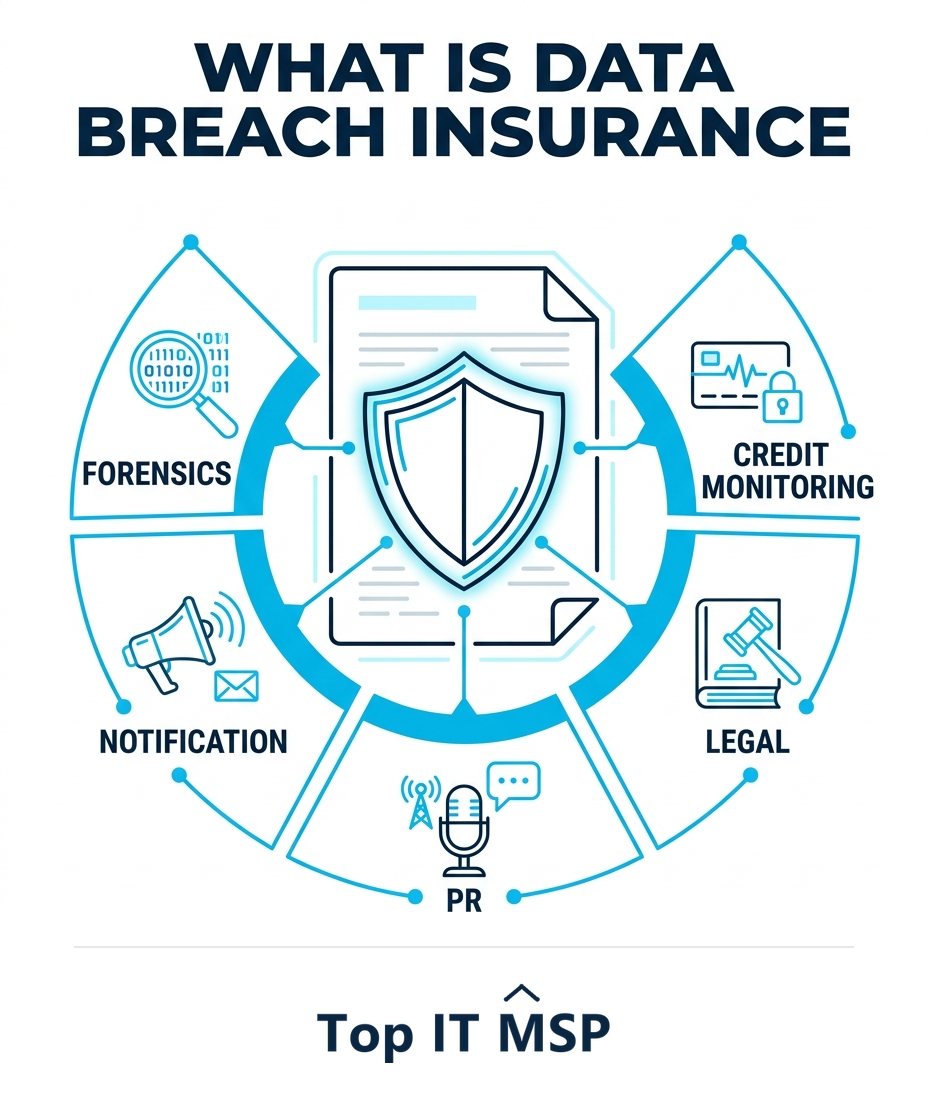
- Data breach insurance pays the costs of responding to a breach: forensics, notification, credit monitoring, legal, and PR.
- It is the first-party breach-response coverage within cyber insurance, often part of a broader cyber liability policy.
- Cyber liability insurance is broader, adding third-party claims and other cyber risks like ransomware.
- Any business holding personal, financial, or health data should consider it.
- Insurers require core security controls to issue a policy and pay a claim.
What is data breach insurance?
Data breach insurance is coverage that pays the costs of responding to a data breach, the expensive scramble that follows when sensitive information is exposed, stolen, or lost. When a breach hits, a business faces a cascade of immediate costs: hiring forensic investigators to find out what happened, notifying every affected customer or employee (often a legal requirement), providing credit monitoring, fielding legal fees, managing public relations, and dealing with regulators. Data breach insurance exists to absorb these first-party costs, meaning your own expenses, so a breach does not become a financial catastrophe on top of an operational one.
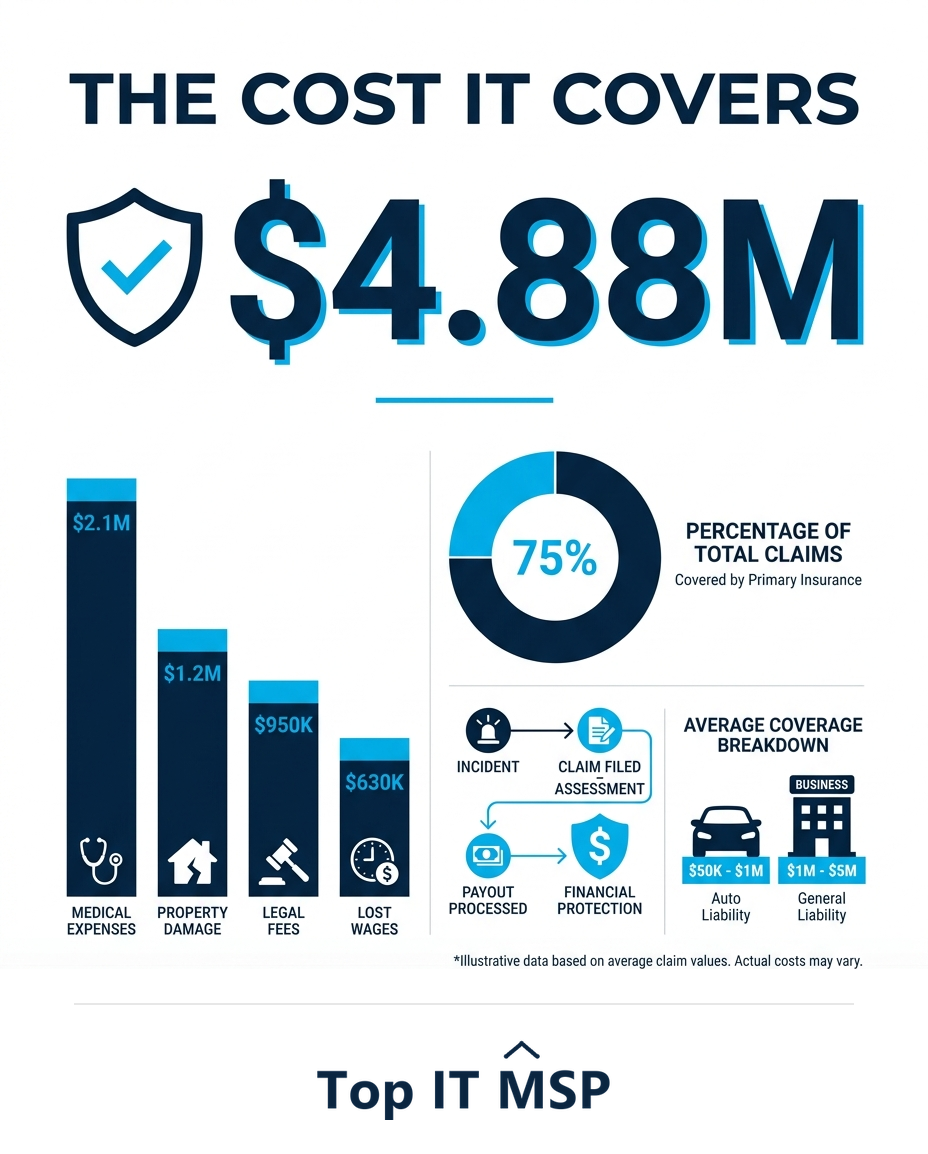
The need is acute because breaches are common and expensive: the average data breach reached $4.88 million in 2024, the typical breach takes about 258 days to identify and contain, and reported cybercrime losses topped $12.5 billion in a single year. For any business holding personal, financial, or health data, that exposure is real. This guide explains what data breach insurance covers, how it relates to broader cyber insurance, and who needs it. It pairs with our cyber insurance coverage checklist and cybersecurity services overviews.
What data breach insurance covers
Data breach insurance focuses on breach-response costs. A typical policy covers:
- Forensic investigation. Experts to investigate how the breach happened, what data was affected, and how to stop it.
- Notification. The cost of informing affected individuals, which laws in most places require, often within a set time.
- Credit monitoring. Providing affected people with credit or identity-monitoring services, frequently expected or mandated.
- Legal counsel. Specialized breach-response lawyers to guide your obligations and limit liability.
- Public relations. Help managing the reputational fallout and communicating with customers and the public.
- Regulatory response. Costs of dealing with regulators and, in some policies, certain fines and penalties.
These costs add up fast, and they hit immediately, before any operational recovery. For a small business especially, an unfunded breach response can be the blow that proves fatal, which is exactly the gap this insurance fills.
Data breach insurance vs cyber liability insurance
These terms are used loosely and overlap, so it helps to be precise. Data breach insurance, as the name suggests, focuses on breach response, the first-party costs above. Cyber liability insurance is broader: it includes breach response but adds third-party coverage (claims and lawsuits from customers or partners harmed by your breach) and often other cyber risks such as ransomware, cyber extortion, and business interruption.
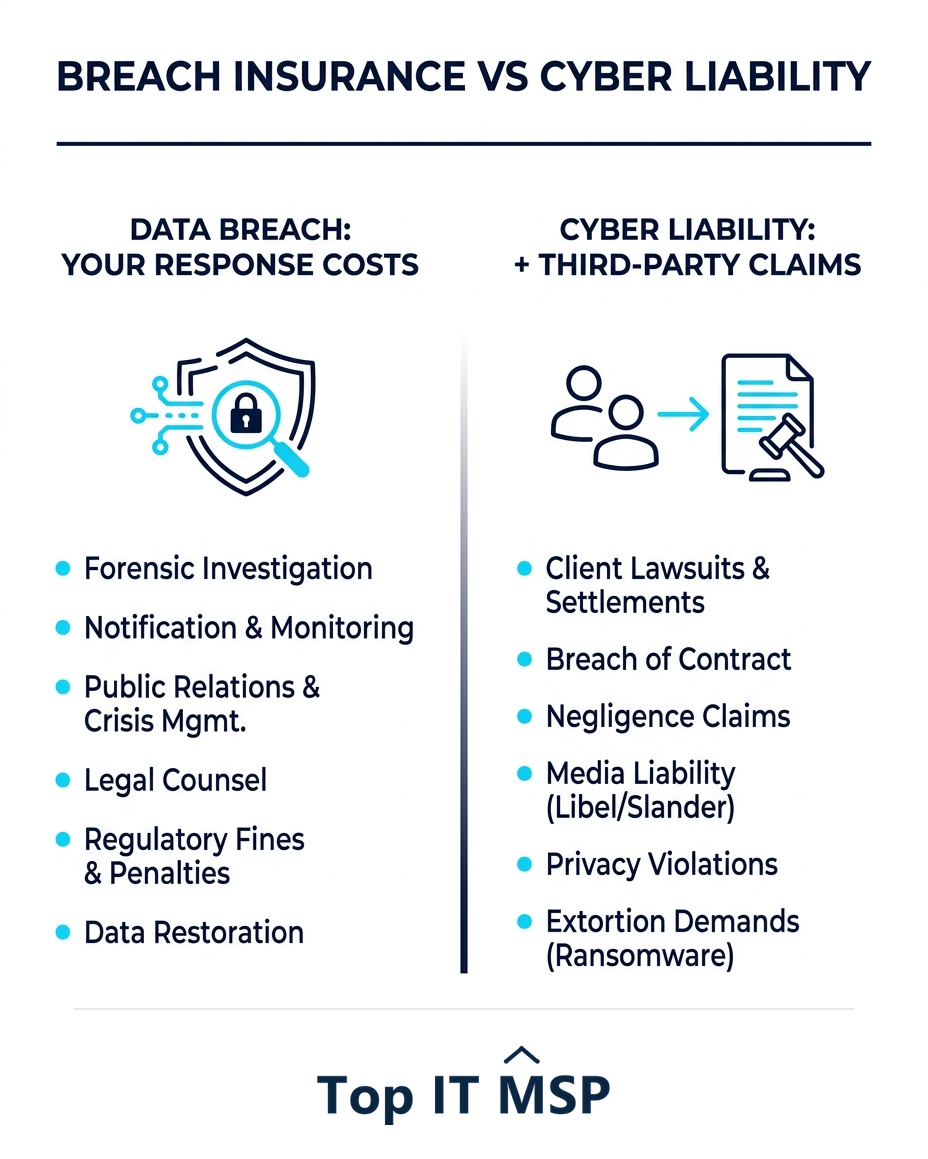
In practice, data breach coverage is usually one component of a modern cyber insurance policy rather than a wholly separate product. The key is to understand what your specific policy includes: confirm it covers both your own response costs and liability to others, and watch for gaps like social-engineering fraud that are often excluded. Do not assume the name on the policy tells you the full scope, read what is actually covered.
Who needs data breach insurance?
The simple test: if your business stores or handles sensitive data, personal information, payment details, health records, or confidential business data, you have breach exposure, and you should consider this coverage. That describes the overwhelming majority of businesses today. It is especially important for healthcare providers, financial firms, retailers, and any company in a regulated industry subject to data-protection laws, but few businesses hold no sensitive data at all, and even an unregulated business holds employee records. Small and midsize businesses are frequently targeted precisely because their defenses are often weaker, and they are also least able to absorb breach-response costs out of pocket, which makes the insurance most valuable exactly where it is most often overlooked.
What it costs and how to qualify
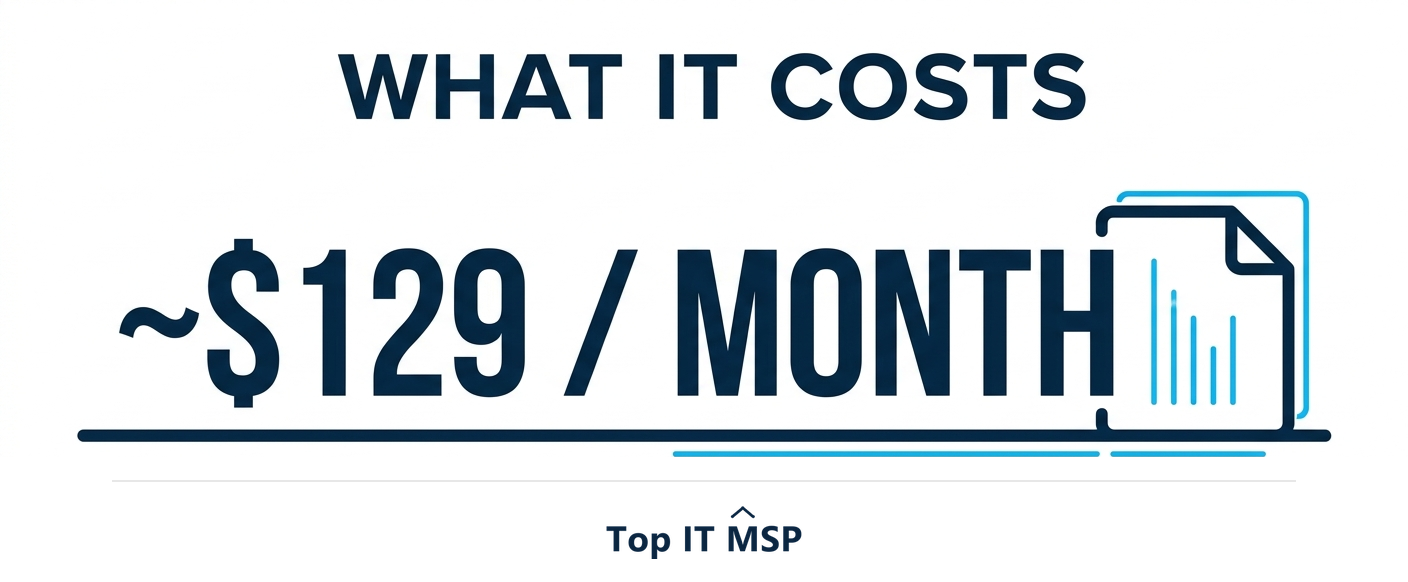
Cyber and data breach insurance is affordable relative to the exposure it covers. Small businesses pay an average of about $129 a month, with premiums ranging widely by revenue, industry, data held, and coverage. As with all cyber insurance, qualifying now depends on your security: insurers require core controls, multi-factor authentication, endpoint detection and response, tested backups, patching, and security training, before they will insure you or pay a claim. The human factor weighs heavily, since the human element features in 68 percent of breaches, so insurers value training and access controls. Better security both lowers your premium and reduces the chance you ever need to file.
Insurance is a backstop, not a shield
It is worth repeating the most important caveat: data breach insurance helps you recover financially after a breach, but it does not prevent one, and it will not pay if you lacked the controls you claimed on your application. It does not undo the reputational damage, the lost customer trust, or the disruption. The right way to think about it is as a financial backstop behind strong security, not a substitute for it. The same controls insurers require are exactly what reduce your chance of a breach in the first place, so investing in security and buying insurance work together, the security lowers both your risk and your premium.
Getting both right
Getting data breach protection right means doing two things: implementing the security controls that prevent breaches and qualify you for coverage, and choosing a policy whose scope matches your real exposure. Both take expertise, and security talent is scarce amid a global shortfall of about 4.8 million cybersecurity professionals. Many businesses work with a managed IT or security provider to put the required controls in place, document them for the insurer, and reduce the risk of a breach in the first place, part of why the managed services market is projected to grow to about $879 billion over the next decade, as more data moves to the cloud, in a market where public cloud spending is forecast to top $723 billion in 2025.
If you are evaluating data breach or cyber insurance, a provider can help you meet the requirements and close the security gaps that void claims. To find one, browse vetted, merit-ranked firms by city in the Top IT MSP directory, where ranking is earned on rating and verified data. (This guide is general information, not insurance advice; confirm details with a licensed broker.)
Frequently asked questions
What is data breach insurance?
Data breach insurance covers the costs of responding to a data breach, including forensic investigation, notifying affected people, credit monitoring, legal fees, public relations, and regulatory response. It absorbs these first-party (your own) costs so a breach does not become a financial catastrophe on top of an operational one. It is usually part of a broader cyber insurance policy.
What does data breach insurance cover?
It typically covers forensic investigation to determine what happened, the cost of notifying affected individuals (often legally required), credit or identity monitoring for them, specialized breach-response legal counsel, public relations to manage reputational fallout, and the costs of dealing with regulators, sometimes including certain fines. These breach-response costs hit immediately and add up fast.
What is the difference between data breach insurance and cyber liability insurance?
Data breach insurance focuses on breach response, the first-party costs of handling a breach. Cyber liability insurance is broader: it includes breach response but adds third-party coverage for claims from customers or partners harmed by your breach, plus other cyber risks like ransomware and business interruption. Breach coverage is usually one component of a modern cyber policy.
Who needs data breach insurance?
Any business that stores or handles sensitive data, personal information, payment details, health records, or confidential business data, has breach exposure and should consider it, which describes most businesses. It is especially important for healthcare, finance, retail, and any company under data-protection laws, and most valuable for small businesses that can least absorb breach costs out of pocket.
How much does data breach insurance cost?
As part of cyber insurance, small businesses pay an average of about $129 a month, with premiums ranging widely by revenue, industry, data held, and coverage limits. Qualifying now depends on your security: insurers require controls like multi-factor authentication, endpoint protection, tested backups, patching, and training before they will issue a policy or pay a claim.
Does data breach insurance prevent breaches?
No. It helps you recover financially after a breach but does not prevent one, undo reputational damage, or pay out if you lacked the controls you claimed. Treat it as a financial backstop behind strong security, not a substitute. The same controls insurers require also reduce your chance of a breach, so security and insurance work together.
Related reading
Protect against breaches and qualify for coverage
Top IT MSP is the independent directory of vetted managed IT and security providers across North America. Compare merit-ranked firms in your city that implement the controls insurers require and reduce breach risk. No pay-to-play.
Top IT MSP is an independent directory that connects you with vetted managed IT providers. Browse the directory city by city:
- Managed IT Services in Chicago
- Managed IT Services in Houston
- Managed IT Services in Dallas
- Managed IT Services in Phoenix
- Managed IT Services in Seattle
- Managed IT Services in Spokane
- Managed IT Services in St George
- Managed IT Services in St. Louis
- Managed IT Services in Syracuse
- Managed IT Services in Tampa